Introduction
Healthcare will change faster than ever in the coming years. In the next few years, healthcare will change faster than ever.
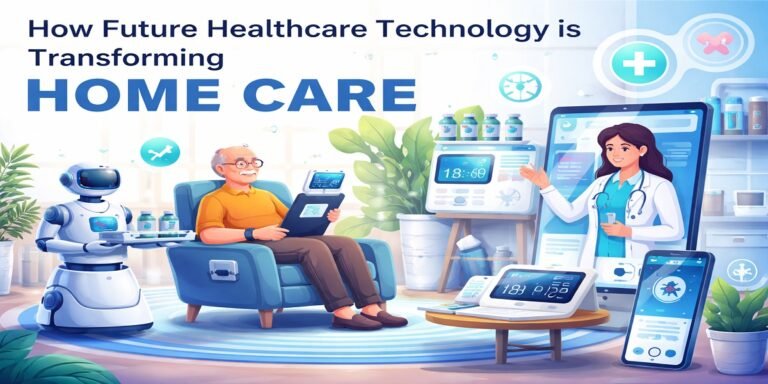
In hospitals and clinics, the future of healthcare is no longer. Wearable health devices will be the future of healthcare. They are moving away from the hospital-centric approach and toward patient-centered solutions that allow individuals to manage their health at home.
This will be an article that examines how the future of healthcare is transforming home care, what innovations are driving these changes and what it means for patients, caregivers and the healthcare industry.
Home Healthcare in the Digital Age
Home healthcare is nothing new. But the new technology has taken it to a whole new level.
The COVID-19 Pandemic accelerated this shift, and healthcare providers are now adopting solutions for remote care. Home healthcare remains in high demand, owing to its convenience and efficiency.
Many patients, especially the elderly and those with chronic illnesses, prefer to be treated at home where they feel safe. Technology makes this possible, without compromising the quality of the care.
Artificial Intelligence for Home Healthcare
Artificial intelligence is a powerful force in home care. Systems that use AI can analyze huge amounts of data to provide accurate insights.
How AI can help:
- It is important to detect diseases early
- Personalizing treatment plans
- Monitor the patient’s health in real time
- Assisting doctors in decision-making
AI-powered chatbots and virtual assistants can help patients manage their health by answering questions, reminding them to take medication or scheduling appointments.
This automation level eases the burden on healthcare professionals while ensuring patients receive timely help.
Remote Patient Monitoring (RPM)
Remote Patient Monitoring is revolutionizing the home healthcare industry. With this technology, healthcare providers can track patient data without having to visit clinics.
RPM Key Features:
- Continuous monitoring of vital signs (heart rate, blood pressure and other vital signs)
- Instant alerts in case of abnormalities
- Data sharing with healthcare providers
Patients can use smart devices to monitor their daily health, such as if they suffer from chronic diseases like diabetes or hypertension. This helps doctors detect problems early and prevent complications.
RPM improves patient outcomes and reduces hospital readmissions.
Wearable Health Technology
Wearable medical devices are becoming more popular and play an important role in home healthcare.
Wearable Devices Examples:
- Smartwatches
- Fitness trackers
- Smart ECG Monitors
- Sleep tracking devices
These devices can provide you with real-time health data and insights on your physical activity, heart conditions, sleep patterns, and more.
The wearable technology of the future will include more advanced features such as:
- Continuous glucose monitoring
- Stress level detection
- Early warning signs of diseases
Wearables can help individuals make better health decisions.
Telemedicine & Virtual Consultations
Telemedicine allows patients to consult with doctors without having to physically visit a hospital. Patients can consult healthcare professionals through video calls, mobile apps, or online platforms.
Telemedicine Benefits:
- Save on travel costs and time
- Access to experts around the world
- The risk of infection can be minimized
- Quick diagnostic and treatment
Telemedicine can be a great benefit to those who live in remote locations with limited access.
With the integration of virtual reality, the future of telemedicine will be more advanced.
Smart Home Healthcare Systems
Smart homes are more than just convenience and automation. Smart homes are becoming hubs of healthcare.
Smart Healthcare Homes:
- Voice-controlled Health Assistants
- Automatic medication reminders
- Emergency alert systems
- Fall Detection Sensors for Elderly Patients
These systems offer constant care to patients without the requirement of full-time caregivers.
The system will notify the family or emergency services if an elderly person falls.
Robotics for Home Care
Robotics in home healthcare is a brand new, exciting technology. These robots will help patients with daily activities and medical needs.
Robotics Uses:
- Mobility Assistance for Elderly People
- Take medications with patients
- Companionship
- Supporting rehabilitation exercises
Robotic caregivers are especially helpful for patients who need constant assistance or are alone.
Robotics is still a work in progress, but it will be a major factor in reducing caregivers’ workload in the future.
Internet of Medical Things
Internet of Medical Things (IoMT) is a term that describes connected medical devices, which can communicate with each other and healthcare systems.
How IoMT works:
- Devices collect patient data
- Cloud platforms receive data
- Data analysis by healthcare providers
- Real-time feedback is available
The interconnected network allows seamless communication between doctors, patients and other medical professionals.
IoMT improves accuracy, efficiency and response time in home healthcare.
Data Security Challenges and Privacy Issues
Despite the many advantages of technology, data privacy and security are still concerns.
It is important to protect health data. Data breaches and cyberattacks are more likely with the increasing use of connected devices.
Solutions to these Challenges
- Strong encryption methods
- Secure cloud storage
- Strict data protection regulations
- User awareness and education
Healthcare providers must prioritize cybersecurity to ensure patient trust and safety.
Technology and Home Healthcare: Benefits
The transformation of home healthcare through technology has many benefits.
1. Patients’ Comfort is Improved
Familiarity with the environment can reduce anxiety and stress.
2. Cost-Effective Care
Home care can reduce hospitalizations and medical costs.
3. Better Disease Management
Continuous monitoring can help to detect problems early and improve management.
4. Accessibility Increased
This technology allows people living in remote and underserved areas to access healthcare.
5. Improve your quality of life
Patients can be independent while receiving care.
Limitations and Challenges
Despite its many benefits, home healthcare technology has its challenges.
- Users lacking technical knowledge
- Initial purchase costs for advanced devices
- Rural areas have internet connectivity issues
- Technology Dependence
Addressing these issues is essential to increasing the adoption of solutions for home health care.
Future Trends in Home Healthcare Technology
Thanks to new innovations, home healthcare will have a brighter future.
1. AI-Powered Diagnostics
AI improves the accuracy of diagnosing diseases without human intervention.
2. Personalized Medicine
Treatments can be tailored to the genetic profile of each individual.
3. Wearables for Advanced Technologies
The devices are more accurate and can detect diseases earlier.
4. VR, a therapy tool
VR is used for mental health and rehabilitation.
5. Blockchain in Healthcare
Blockchain technology improves data security, transparency and privacy.
Conclusion
The integration of AI with wearable devices allows patients to receive high-quality care without leaving their homes.
Data security and the adoption of technology remain challenges. However, these will be overcome through ongoing advancements.
As we move towards 2026, home healthcare will continue to evolve, providing smarter and more personalized solutions for patients all over the world.